Ask any installer what they’ve spent most of their week doing and there’s a fair chance the answer involves stripping something off a wall that looked brilliant in 2019. That’s the quiet tension sitting underneath every wall covering and wallpaper specification. The product goes up in a day or two. The decision lives in the building for the next 7-10 years, sometimes longer in a residential setting, and the client remembers who chose it.
So, the useful question isn’t “what’s trending”. It’s “what still reads as considered in 2032”. Across Sydney, Melbourne, Brisbane and Perth projects, a fairly consistent picture is emerging, and it’s less about pattern than most trend roundups suggest.
The Shift from Decoration to Atmosphere
The single biggest change is philosophical. Wall coverings used to be something added to a finished room. Now they’re increasingly the first decision, setting the temperature that joinery, textiles and lighting respond to. Design publications covering 2026 forecasts describe wallpaper moving from accent to foundation, with textural neutrals and immersive treatments leading the way.
That reframing matters commercially. When a designer wall covering is the base layer rather than the garnish, it needs to behave like architecture. It has to tolerate being looked at every day for years without asking for attention.
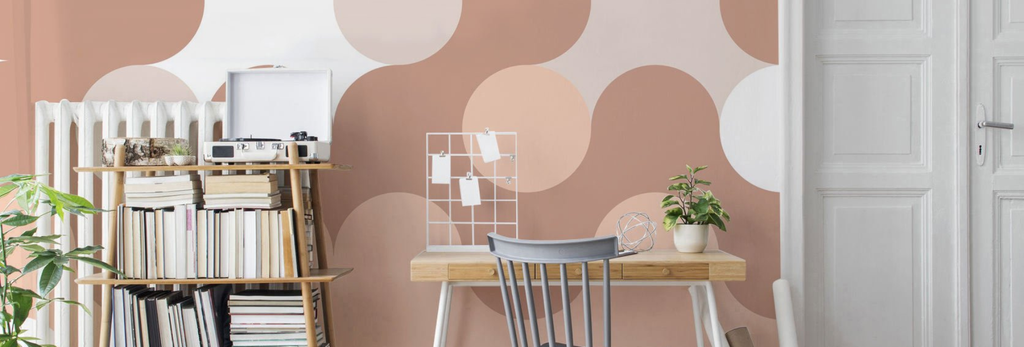
Designer Wallpapers and Wall Murals Worth Committing To
Not every wall covering trend deserves a place in your next project, but the right one can shift the whole feel of a room and still look years down the line.
Tonal texture ahead of busy pattern
Linen weaves, grasscloth, suede effects, subtle embossed relief. These read as material rather than motif, and that’s why they age well. Trend coverage repeatedly flags textured surfaces that mimic linen, grasscloth and plaster as a dominant direction.
The practical advantage is light. A textured surface changes across the day, which means a room doesn’t need pattern to feel alive. In hospitality, this is gold. A restaurant wall that looks generous at 7pm under warm downlights and calm at 11am for breakfast service is doing more work than any print.
One caution worth naming. Natural grasscloth has visible seams and panel-to-panel colour variation. That’s inherent to the material, not a defect. Clients need to see a sample of two joined drops before signing off, otherwise the handover conversation gets awkward.
Plaster and Limewash Effects
Limewash and Venetian plaster looks have moved from niche to mainstream, and there are now three genuinely different routes to the finish: applied mineral paint, true polished plaster, and printed or embossed wall coverings that emulate the mottling.
Each has trade-offs. Real limewash breathes and patinates but is difficult to patch invisibly. Polished plaster is beautiful and expensive, with cost driven almost entirely by labour. A well-made plaster-effect wall covering delivers about 85% of the look for a fraction of the application time, and it’s far more forgiving on plasterboard that’s less than perfect. For a commercial fit-out running to a fixed programme, the covering usually wins on risk alone.
Oversized Botanical Murals, Used with Restraint
Large-scale botanicals are having a genuine moment, and they work best where a room needs depth it doesn’t naturally have. Think a windowless private dining room, a washroom, or a narrow entry hall.
The version that dates fast is the photographic one. A hand-painted or illustrated botanical, scaled properly to the wall, ages like artwork. A high-saturation photographic jungle print ages like a screensaver. The difference is mostly in the drawing and the colour palette, not the subject.
Scale is where most specifications go wrong. A mural designed for a 4.2 metre wall, installed on a 2.7 metre wall, loses its composition entirely. Always request the panel layout drawing and mark it against site dimensions before ordering.
Panelling with Wallpaper Above
Timber, MDF panelling, or acoustic panelling to dado or three-quarter height, with a covering above, is one of the most reliable moves available. It’s not new. Georgian interiors did it. That longevity is exactly the point.
It solves practical problems too. Panelling takes the abuse at chair and trolley height, which is where commercial wall coverings usually fail first. In a hotel corridor or a café banquette, this configuration extends the life of the paper considerably.
Warm Earth Palettes Over Cool Grey
Cool grey has been fading for several years, and 2026 commentary is fairly blunt about it, with grey listed among the palettes designers are moving away from. The replacements are ochre, terracotta, clay, mushroom, olive and warm stone.
There’s a sensible reason beyond fashion. Australian natural light, particularly in Brisbane and Perth, is warm and high in intensity. Cool greys can look flat and slightly dirty under it. Warm neutrals hold up better in that light, which is partly why the shift has stuck here.
Wrapping the Ceiling
Continuing the covering across the ceiling creates a genuinely different spatial experience. It’s most effective in small, dark, or transitional spaces where you want a sense of enclosure rather than expansion.
Budget realistically. Ceiling work is slower, harder on the installer, and usually needs an extra set of hands. Expect a meaningful labour premium over the same area on a wall. Also confirm the pattern is non-directional or specifically designed for ceiling application, because plenty of prints simply read as wrong when rotated.
What’s Worth Skipping
Now, if it’s what your client is set on, we’ll make these options work. But they’re certainly worth having an honest chat about.
The Single High-Contrast Accent Wall
Design commentary now routinely lists it among outdated approaches. It tends to read as hesitation rather than intent. If a pattern is good enough for one wall, it’s usually good enough for four.
Peel-and-Stick in Homes, Hospitality, and Commercial Settings
Useful for short-term retail activations and rental properties. Poor for anything expected to last, particularly in humid Queensland conditions or on walls with any moisture movement.
Photographic Faux Materials
Printed brick, printed concrete, printed marble. The eye resolves the flatness quickly and the illusion collapses. Embossed and textured products that actually have relief are a different proposition and hold up far better.
Tiny-Scale Geometrics in Large Spaces
They tend to optically vibrate at distance, which can irritate the eye, and they carry a very specific mid-2010s timestamp.
How Long Does a Wall Covering Realistically Stay Current?
There’s no published data on this, so treat what follows as informed estimate based on our industry experience rather than fact.
- Tonal texture, natural fibre: Stays current 10 to 15 years, and holds up physically for 10 to 15 years in commercial grade.
- Plaster and limewash effect: Stays current 8 to 12 years, with physical durability of 10 years plus.
- Large-scale botanical mural: Stays current 5 to 8 years, though it’ll physically last 10 years plus.
- High-contrast statement print: Stays current just 3 to 5 years, despite physical durability of 10 years plus.
That last one is the real lesson. Wall coverings rarely fail physically. They come down because someone stopped liking them.
Hospitality operators tend to refresh on a 5-7 year cycle regardless of condition, usually tied to brand updates or lease events.
The Resale Question, Answered Honestly
Wall coverings don’t appear as a line item in a valuation. What they influence is buyer perception, and that cuts both ways. The US National Association of Realtors has noted that wallpaper can either help or hinder a sale depending on execution and taste.
A practical position for residential property designers and clients:
If the property is likely to sell within three years, keep textural and tonal work in the main living areas and confine bold pattern to powder rooms, studies and butler’s pantries. Buyers forgive personality in small rooms and frequently enjoy it.
If the client is staying 7 years or more, specify wallpaper they actually love. The odds of them selling into the exact market that shares their taste are low enough that designing around a hypothetical buyer wastes the project.
One genuine resale risk deserves mention: removal difficulty. A covering installed directly onto unsealed, unprimed plasterboard can tear the paper face off the board on removal.
That turns a cosmetic job into a repair job, and buyers or their builders price that in. Proper sizing and priming protects the client at both ends of the covering’s life.
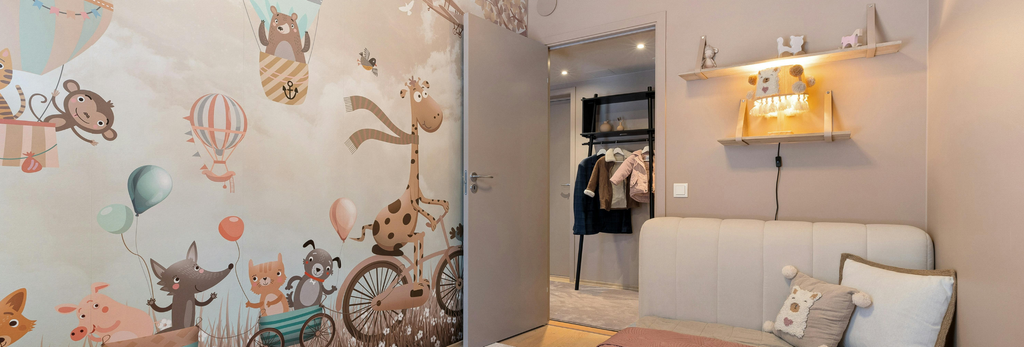
From Wallpaper Specification to Installation, Sorted by One Australia-Wide Supplier
Allegra Interiors works across residential, hospitality and commercial projects, handling the full process from on-site measure and quantity calculations through to substrate preparation, installation and clean-up. Our team draws on leading wallpaper design houses including James Dunlop, Zepel, Mokum and Casamance, so specifications hold up against fire ratings, wear expectations and realistic lead times. We also specialise in custom window treatments and outdoor shading, including blinds, curtains, shutters, and more. Designers come back because the detail gets sorted before it becomes a problem on site, not after.
Planning a fit-out or renovation? Book an obligation-free on-site consultation and get accurate quantities, product recommendations and a clear installation timeline before you commit your client’s budget.
FAQs
Can wall coverings be installed over existing wallpaper?
Generally no, and it’s not worth the risk. The old adhesive can reactivate, seams telegraph through, and any failure underneath becomes a failure on top. Removal, repair and priming is the correct sequence. Allegra Interiors quotes this as part of our designer wallpaper services so there are no surprises once the old paper comes down. Book an obligation-free consultation for projects in Australia, from Perth to Melbourne, or Adelaide to Brisbane.
What’s involved in preparing walls for wallpaper or murals properly?
Removal of existing coverings, patching, sanding, then sealing with an appropriate primer or size. That seal does two jobs: it gives the adhesive a consistent surface, and it protects the plasterboard when the covering eventually comes off. Skipping it is the most expensive saving available on any wall covering project. From residential renovations to commercial fitouts, Allegra Interiors takes bespoke wall coverings from concept through to completion. Book your obligation-free on-site consultation and let’s get the detail right from the start.
Are wall coverings and wallpaper suitable for bathrooms and wet areas in Australian conditions?
Some are, with conditions. Well-ventilated powder rooms handle most products. Main bathrooms with showers need a suitable vinyl and good extraction, and coverings shouldn’t run into direct splash zones. Humidity in Brisbane and northern NSW raises the bar further. Ask Allegra Interiors for a product recommendation specific to your site. We work across Australia.
What is the difference between commercial grade and residential wall coverings?
Commercial products carry fire testing to AS/NZS standards, heavier weights measured in grams per square metre, and abrasion resistance suited to corridors, lifts and hospitality spaces. Residential papers prioritise finish, texture and colour depth over durability ratings. Specifying a residential product in a commercial fit-out often fails certification, so it pays to confirm compliance requirements at the concept stage rather than at handover. Whether you’re specifying for a single living room or a multi-level commercial project, we handle measure, quantities, substrate prep and installation so your documentation holds up on site. Book your obligation-free consultation today. We work across Australia, from Melbourne to Perth, Sydney, Brisbane and Adelaide.